Wednesday, June 24, 2026

Cruising on Crazy Anna

This year, for our sailing vacation, we decided to take a two-week cruise in the general direction of Desolation Sound.  This would be our first real cruise on Crazy Anna, our new Vancouver 27. We are now members of the Maple Bay yacht club and it was so much easier to load up our supplies without having to row them back and forth in a dinghy. After more than ten years of keeping our boat on a mooring, we sure appreciated the easier access. Still, it took us two whole days to prepare for the trip. You would think that after years of doing this we'd be able to get things done in less time...

On the first day, we set sail for Nanaimo, in the hope of eventually catching up with Jim and Franca who own a similar Vancouver sailboat. They had just crossed the Strait of Georgia to Pender harbor on the Sunshine coast and were at least a day ahead of us. We planned to arrive at Dodd Narrows in time to pass through on the last of the flood tide, but we left a bit late that morning and were unable to reach the narrows in time. So, we stopped at Ruxton island and tied up to my friend Andy's mooring ball in Herring Bay. Andy rowed out with a nice bottle of red wine and we spent a very pleasant afternoon together.
 
Around supper time we untied and motored north, passing through the narrows about an hour before the turn of the tide and fighting currents of two to three knots. The wind came up from a favourable direction and we sailed north to the Nanaimo anchorage at Newcastle Island. The only hairy bit was avoiding the Gabriola Island and Vancouver bound ferries, all of which pass through the body of water between Dodd Narrows and Nanaimo Harbour. 
 
Rani looks back through a completely circular branch on an Arbutus tree
 
We checked in with Jim that night by email and he told us that they were returning to Nanaimo and suggested that we meet up at Newcastle Island later the next day. We spent much of that day hiking the trail that goes around the island. This entire island is a provincial park managed by First Nations and it has many kms of beautiful trails. With the very low tides we've been having, we were able to see the island in a way we've never seen it before, the shoreline receding in a long shelf along much of the outside of the island. Across the sparkling waters of the strait, the Coast Mountains make an impressive backdrop to this walk. And it's always neat, walking on what will be the bottom of the ocean in a few hours. Jim and Franca arrived in the anchorage late in the afternoon, and we had them over for supper of homemade vegetarian lasagna and spent a very pleasant evening with them.
 
Walking the beach at an extreme low tide on Newcastle Island
 

We had already decided the next day that we were going to cross the Strait of Georgia to Howe Sound, rather than trying to go north as we had originally planned. The 20+ knot northwesterly winds would have made the trip unpleasant and military exercise area Whiskey Golf was active, so we would have had to make a passage directly northwest inside the safety area in order to avoid the torpedo testsing exercises.  Before leaving, we had to deal with a small issue with our fresh water tanks, that turned out to be caused by a leak in the fioot pump. All our water from one tank - about 70 liters - ended up in the bilge and was pumped overboard. I enjoyed a good hour of morning exercise, bucketing water down the jetty to the boat from a pump in the park. We decided not to repair the problem, but simply closed off the tank valve when not using it to avoid losing all our water again.
 
Our sail across to Howe Sound was an uneventful reach with three or four foot swells and a couple of feet of chop - a little bit splashy but very pleasant. We did this under a reefed main with a partially reefed genoa, and sailed into Howe Sound just in time to pick up the afternoon inflow winds that blow up the sound toward the mountains.
 
Much of the logging that happened here was old growth hand logging
Old burnt out cedar on Gambier Island


Beach looking toward the Sea to Sky Highway

Big tides mean a steep climb up the ramp at Camp Artaban in Port Graves

The highlight of our trip was our stay in a bay at the south east end of Gambier Island (Port Graves), from which we spent three full days hiking the hills and swimming in lakes.  This island has some pretty impressive hills that rival those on the mainland around it, including Gambier peak itself, which is close to 3,000 ft. We didn't climb the highest peaks, but we did visit Gambier Lake which is at 1400 ft and we climbed up to Mount Artaban which has view back over English Bay on the Sea to sky Highway. Altogether my pedometer said we walked about 83000 steps in 3 days. And a lot of this was up and down. Rani keeps me young!

Sign below Mount Artaban

View from Mount Artaban


View from Bert's Bluff, named for a life guard at Camp Artaban who made the trail up to the viewpoint


Swimming at Gambier Lake
 
After Gambier Island we spent a day at Keats island, near Gibson, which has a park and mooring balls in the anchorage. We enjoyed a shorter day here with only a few hours on the trails and then rather than head up north into northwest headwinds, we decided to cross back over to the Gulf islands. 
 
Colorful canoe at Keats Landing on Keats Island
 

Lovely views towards Vancouver Island from Keats Island

Granite coastal bluffs and islets - Keats Island


Looking toward Gibsons from Keats Island
 
We selected Porlier Pass as our entry point to leave the strait and head into the sheltered waters of the Gulf Islands. This allowed for a better angle off the wind and some very nice sailing. The winds were fresh, though, and we had 15 knots initially rising to 20 knots quite consistently as we were near the middle and staying up until we reached the pass. It took us only four hours of sailing, averaging around six knots, and we made our way through the pass with a favorable current, ebbing at one or two knots. We anchored in between the Secretary islands, an anchorage we'd never explored before. Unfortunately these islands are private and when we landed, we saw No Trespassing signs on both the North and South Secretary Islands, so we had to wait until the next day for our hike.
 

The next day we sailed down under jib alone to Wallace Island where we anchored in a little cove off the south end that provides excellent protection from northwesterly winds. Wallace Island is almost entirely parkland and has hiking trails that run for the entire length. There was a summer camp on the island, popular with vacationers from Victoria and Vancouver in the 1950's. Some of the camp's buildings are still standing in the campground near Connover Cove.

Rani looks down on Crazy Anna anchored at the south end of Wallace Island


By this point we were resigned to not making our way north and decided to visit a few places nearby that we had not seen for a while, including Dionisio Park at the north end of Galiano Island and Montague Harbour further south on the same island. Dionisio is right on Porlier Pass and has no really protected anchorages, so we opted to anchor on the Gulf Islands side of the pass. We paddled over to the park fighting the current and using back eddies to get around from our bay to a landing spot below a range light. It was a weekend and the park beaches were covered in mostly young sun bathing Vancouverites. You can take a ferry from Vancouver to Galiano and then bicycle to the park, which is not accessible to cars. The trip back in the kayaks was hair raising because the tide had turned and we had to fight currents of more than three knots even right up against the rocky shore.
 

The sandstone almost looks like a petrified sand dune - Galiano Island at Dionisio park

 \

Rani had not visited Montague Harbour for many years, so we made that our next stop and anchored north off a lovely sand beach in the company of a half dozen other sail and power cruisers. This is also a camping park and appeared to be full as well. From here we decided to begin heading home, cutting our trip short by a couple of days so that Rani could take part in a friend's birthday celebrations and I could play sax at the highschool graduation. We made Prevost island our next stop and enjoyed two days of hiking in the federal park land on the north west end of the island. We met an American single hander named Calvin on a Morgan 38 sailboat here. He was heading north to Alaska and then planned on running down to Central America for the winter. 


Beach on the hiking trail at Russel Island Gulf Islands Federal Park


We did all our off-sailboat travel using two 10 foot Pelican kayaks
 

Lovely late day light at Selby Cove on Prevost Island 

 
Our final night was spent at anchor off Russel island in Fulford harbour, only a few hours sail from home. Rani had not visited this lovely little island before, which lies close to Sydney, but still feels remote. The island has ties with Hawaii and we met a local who recommended "Maria Mahoi of the Islands" as a good read to learn more about this.
 
Crazy Anna never let us down
 
 
We came home this morning and were unpacked and home by 2pm. The room is still rocking for both of us after spending a very satsifying two full weeks on a small boat.


Wednesday, January 14, 2026

Kayaking from the LaHave Islands to Halifax Pt 2

Leaving my camp on Herring Point, I paddled well off the coast to avoid the shallow surf off Bayswater Beach.  This was an exposed piece of coast, despite a few islands, and I was nervous about the next crossing of Saint Margaret's Bay. The wind was not bad, though, and I decided to paddle straight across from Southwest Island to Peggy's Cove. I landed in the cove and pulled the kayak up onto the dock before taking a walk around the village and up to the famous lighthouse. This area can be pretty fearsome in a storm, so I did not linger, but relaunched and aimed my bow towards West Dover. From this point on, I was back in a part of the coast that I knew relatively well from day trips in the kayak and hiking expeditions. 

West Dover, at that time, had a restaurant run by a father of one of the victims of the Swiss Air crash. He had opened a restaurant to be closer to where his daughter had met a tragic end and to honour her memory. There is a memorial nearby in memory of all the people who died in that terrible airplane crash, and I recalled that a year earlier we had been forced to change course to avoid the crash investigation area, while sailing the coast on Water Music. I had lunch at the restaurant and managed to convince the owner to fill one of my gallon jugs with drinking water. He was begrudging about this and complained to me about the locals who were always asking him for water. I believe he had to make his fresh water from seawater via reverse osmosis.  He seemed unhappy to be where he was, and I hope he eventually found some peace.

After lunch, I paddled between numerous small islands that make this area a delight to explore in a small boat. I passed Prospect and Terrance Bay, which were favourite kayaking destinations for day trips from Halifax. I was tempted to stop and camp on Hearn Island because it had a good beach and great memories from previous trips in Fraser's sailboat, Itchy and Scratchy.  However, it was still early, and I was feeling strong after my heavy fish and chips lunch, so I continued past Pennant Point and landed near Crystal Crescent Beach, where I set up my tent on the lovely white sand. This is a popular hiking spot and close to a nude beach, so I had a few curious people wonder past my camp as I cooked my supper.

 My final day was also the longest day. My only mistake that day was to overload the bow area of my boat with my spare water, which made it difficult to keep the boat on track. I had to paddle most of the day with my right arm only. Thinking back, I wonder that I did not stop and reload the boat to make it steer properly! This stretch of coast was the most familiar, being one of my favourite hiking and sailing areas. I paddled inside of Sambro Island and past the light at Ketch Head. Whenever I pass Sambro island, I remember one of my first open ocean paddles. With my friend Chris Mills, whio at that time was a lighthouse keeper, we paddled out to the Island, which has one of the oldest lighthouses on the coast. There, we set up our tents and camped overnight amongst hundreds of nesting seagulls. The gulls were unimpressed by our presence and kept up such a crying and commotion all night that Chris did not sleep at all. 

From Ketch head on, the coast has a few coves that were once the location of fishing villages, including Ketch Harbour, Portugese Cove, and Purcell's Cove. Today, large houses line the granite shores and few fishing boats make their home in these harbours. The paddled ended without incident at the head of the Northwest arm, where Fraser greeted me at the dock. As it turns out, I have not paddled on a longer solo trip like this since that day. Some day I would like to come back to Nova Scotia and do something similar, perhaps further down the South Shore.  

Friday, December 5, 2025

Kayaking from the LaHave islands to Halifax Pt. 1

About 15 years after I first dipped a paddle in salt water I worked up the courage to try a multi-day kayak camping trip. I planned this to follow a route along Nova Scotia's south shore, most of which I had already traversed in my 22 foot sailboat, Water Music. Fraser Howell, with whom I had shared numerous small boat adventures, agreed to come along on the first day and camp overnight on Cape LaHave island with me. He would not go further because he had recently been experiencing vertigo in the kayak that made it feel like he was always about to tip over.

The voyage began inauspiciously when I discovered a flat tire on my car. I put on the spare and drove to the local country store/gas station where the owner, Stuart, saved the day with a tire plug kit. He got me back on the road in time to meet up with Fraser at a boat launch on Bush Island. Bush island is one of the LaHave islands that spread across the entrance to LaHave river on Nova Scotia's South Shore. It is connected to the mainland by a bridge and causeway and is a perfect starting point for exploring the waterways and passages between the islands. It was early June and lobster season had just ended, so we were to have the water to ourselves.

We paddled our homemade wooden boats through Wolfe gut and past Tumblin and Bell islands. As we reached the end of LaHave island, we left behind civilization and the islands that are joined by road to the mainland. We passed what must have once been fisherman's homes on Cabbage and Middle Island and pointed our bows across Bell channel toward our destination - a beach at the northern end of Cape LaHave Island. This is the largest of the LaHave islands and does not have permanent homes on it any more. We set up our tents in a clearing above the beach and made supper.

The next morning I said goodbye to Fraser and as I watched him paddling back towards Bush Island I felt the excitement and trepidation that always seems to accompany a new adventure. Over the next four days I would paddle about 120 kms to Halifax, camping along the way wherever I found myself at the end of the day.

Route from our campsite on night one to the head of the Northwest Arm in Halifax

The first day on my own I figured I should be able to make it around a couple of points and perhaps get as far as Blue Rocks or Stonehurst near Lunenburg. I was a little nervous about how heavily I had loaded down the kayak with camping gear and food. It was sitting low in the water and I was not used to paddling the boat with this much weight. Another concern was the open water I would need to cross in order to make it to Halifax in the time I had off from work. If I followed the coastline to avoid the longer crossings, it would probably take me more than twice or even three times as long, so I would need to take the risk. The kayak I was paddling was a river boat my father had built for my brother Mike 25 years earlier. It had no interior partitions that would have provided flotation and buoyancy if I capsized. I knew that in the event of a capsize I would not be able to easily get back into the flooded boat and get it pumped out. With the cold water temperature and almost no-one else on the water, if I flipped over more than a few hundred meters from the land I would likely not survive.

The first day turned out to be quite short. I can't recall why exactly now, but it was probably my nerves that made me end it early. Almost right away, I had to make the first longer crossing to Gaff Point through the choppy waters between the point and West Ironbound Island. I still recall being worried about how the boat would handle the chop and when the wind began to build, small waves started to toss the boat around. The problem with paddling along the outside of an indented coast like Nova Scotia's Eastern or South shores is that there are few places to land safely and lots of points jutting out to reflect waves and make the ocean harder to read. 

I recall an amazing sight shortly after rounding Gaff Point. As I paddled along outside the breakers off Hirtles Beach I could see what looked like surf off the next point. When I crossed Hartling Bay I discovered that what I had assumed was surf was in fact huge sheets of foam, much like you would find in a bubble bath. This foam was probably left over from the vicious surf pounding onto the ominously named Hell Point. Looking at a Google satellite view of this area today, you can see how surfy this point is.

Surf and foam forming at the east end of Hartling Bay near Hell Point

I camped that night on the Kingsburg peninsula in a soon-to-be built upon housing estate development. At that time, this was a wilderness of bracken and short windswept trees, with only a few survey markers to hint at its future.

The next day I visited the Ovens, which are famous for their sea caves and an old gold mine. I poked the nose of the kayak to look into one of the caves, but my exploration was cut short by the arrival of a zodiac tour boat. I rounded the Ovens Point and began another large crossing to Blue Rocks. I had paddled at Blue Rocks before and knew that once across I would have shelter and easy paddling. The crossing went smoothly, and I began to feel more confidence in my overloaded kayak. Sitting lower in the water seemed to make the boat more stable and less affected by wave action. The paddle amongst the shale ledges and islands of Blue Rocks was incredibly scenic, and I had a gentle tailwind that made paddling a pleasure. Once past Stonehurst I would be faced with another large crossing of a large portion of Mahone Bay. 

I stopped for a tea break on Rake Island just inside Hell's Rackets where dozens of seals eyed me as I landed on the gravel beach. I then decided to paddle across the mouth of Mahone Bay to Tancook Island and have lunch there before continuing to the Aspotogan Peninsula. This would be my longest continuous crossing to date, at nearly 8 kilometres. It was still early in the day and the seas were kind to me. I made it into the bay where the ferry arrived from Chester in time for lunch. Before I left, I dropped by the ferry and asked the captain for a marine weather forecast. Looking at my kayak pulled up on the nearby beach, he confided that he would not take that across the little bay we were in, let alone across Mahone Bay. I have heard those sentiments more than once from big boat skippers and fishermen, too.

By the afternoon, the wind was up - again from the southwest - and the waves had built to about a foot as I launched from the beach. The conditions outside were similar, and I tried to feel the rhythm of the waves and match my stroke to avoid leaning too far one way or the other. As the afternoon progressed and the waves built higher, and higher, I began to feel like my kayak was just one instrument in an orchestra and the surrounding waves were also instruments, each playing a different line that I had to harmonize with in order to stay afloat. The music was wild and complex! So long as I kept on top of things and played things correctly,  I could keep my boat moving safely through the tumult. 

I made it safely across the rest of Mahone Bay and camped that night in a lonely cove on the Aspotogan Peninsula. I was running low on water and was forced to gather standing water from crevices in the rock to make my tea and wash up. The night was clear, and I remember looking out of the tent at the intense blackness and a bright canopy of stars overhead.


Monday, November 17, 2025

Kayaking

It’s likely my father’s fault that I love being on the water. Dad was happiest in or on a boat – a sailor, canoeist, and kayaker. He was also an aspiring boat designer and builder. One Christmas, when I was 9, dad gave me a lovely yellow kayak he had designed and built in our basement from plywood. When it was warm enough that the ice was out of the lakes we tried out the boat. Unfortunately I could not keep it upright and dad took the boat home, sawed it in half, and put the pieces out at the curb on the next garbage day. I suppose he did this because he did not want to be responsible for anyone's demise. To his dismay, someone in a pickup stopped in front of our house and tossed the two halves into their truck, probably planning to glue them back together. I think now that the kayak he made me may have been just fine. I was totally inexperienced with narrow tippy boats and could probably have learned to keep it upright with some practice.

The next year, over a long weekend in 1975, we built my first real kayak. It was red and made of fibreglass and polyester resin. Being amateurs, we built it good and strong with lots of extra glass and resin. The 14 foot whitewater slalom design ended up weighing well over 40 lbs – about 10 lbs more than it should have. I still remember the enormous wooden loft at the Banook Canoe Club where we set up the much used moulds. We were helped by a man who had built his own kayak from the same moulds a week earlier in another part of the province. Because they were at the end of their useful life, mine was the last kayak to come out of these moulds.

I vividly recall the pungent and probably brain damaging smell of the resin and the itchiness of the fibreglass sanding dust on my arms. I was 10 years old. I must have been highly motivated, for I gave up 35 weeks of my one dollar allowance, deferring comics and candy, and depositing my savings each week in my Royal Bank account. Dad had promised to match each dollar with one of his own so that I could afford the 70 dollar building cost. My first paddle was made from a set of red plastic oars designed to propel a cheap inflatable boat. Dad cut off the ends and sleeved and used fibreglass to join the oars to make a kayak paddle.

Over the next few years, my father took me on kayak camping trips in the Kejimakujik wilderness. I remember the desperate effort of trying to keep up with his lighter homemade wooden boat in my heavier, slower kayak and with my much weaker paddling muscles. In retrospect, my kayak, though I loved it dearly, was not particularly well suited to camp touring. Being overbuilt, it was low in the water and acted like a submarine in rough conditions. It was also very difficult to keep going in a straight line, being conceived for white water and manoeuvrability with a lot of curvature to the bottom. After the first outing, dad made a skeg, a kind of fixed rudder, using electrical circuit board and aluminum right angles glassed onto the after end. This helped enormously to keep the boat going in a straight line.

In the following years, dad built a fleet of lighter wooden boats from English kits for himself and my mother and brother. I have them to this day, but the overweight red fibreglass slalom kayak is gone now – given to a friend many years ago.

 It was years later when I was in my mid 20s that I first took the little red kayak out into the ocean. What a revelation! Lakes and rivers have a life of their own, but the ocean seemed so much more alive, with its waves, swells, currents, surf, and fog. We lived near the shores of Halifax Harbour and many afternoons I would talk a friend or two into leaving work early for an adventurous paddle to one of the islands in the harbour. I took to using the wooden boat dad had intended for my brother and lending a friend the red ‘submarine’. It was in this wooden kayak that I had my longest ocean paddle – a 5 day 100 mile trip along the south shore of Nova Scotia. To be continued...

Thursday, November 6, 2025

The perfect cruising sailboat (for me anyway)

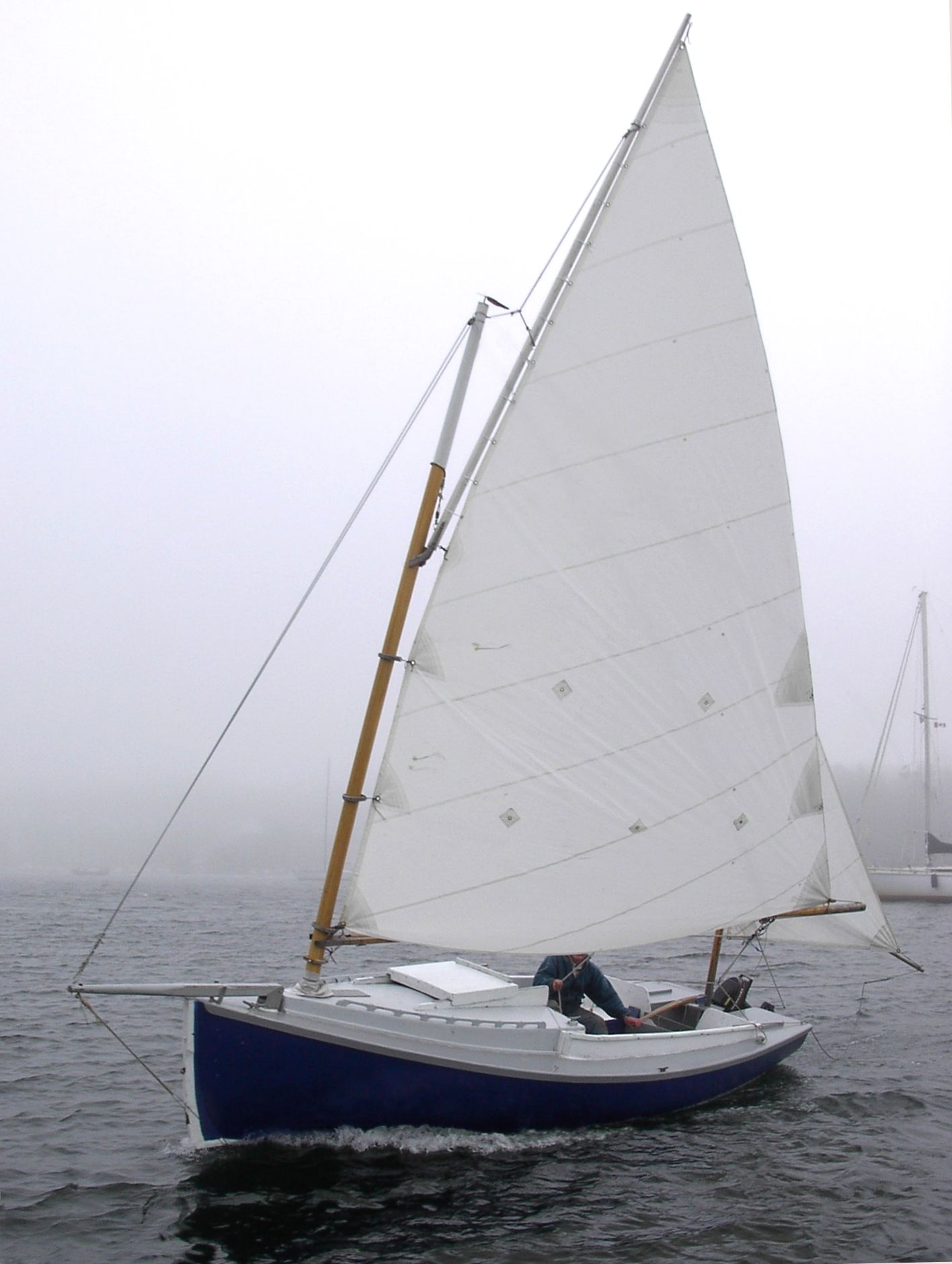
I just added it up and not counting a rowing/sailing dory skiff I once built, I have owned 12 different cruising sailboats. These range from a home built Bolger Chebbacco - a half ton 20 foot wooden cat yawl to a Graham Shannon Coast 34 - weighing 20 times as much and 34 feet long. In between I have owned two Cal 29s - excellent boats that have taken me around Vancouver Island and down to Mexico and back. On the smaller side I briefly owned a wooden Trekka - sistership to the famous Trekka that John Guzwell sailed around the world in the late 50's, a Farr 727 - probably the raciest cruising boat I have owned, a C&C 24 - fast and roomy for her length, and a Paceship 26 - a huge 26 footer actually more like 27 that sailed surprisingly well given her cast iron keel and modest looks. Shortly after I sold my share in the Chebacco to its  co-owner, I imported from Ontario to Nova Scotia, an Abbott 22 - a very capable and fast little sloop that I made some short cruises on along the south shore of Nova Scotia. 


Itchy and Scratchy was my first cabin cruising boat, built with my friend Fraser Howell who did most of the work on this lovely strip plank/cold molded hull.
 
The Abbott 22 was built in Ontario and was designed to compete with the Tanzer 22. This is a sistership to my boat, which I named "Water Music". I sailed her for one season only but made over 40 trips on her.

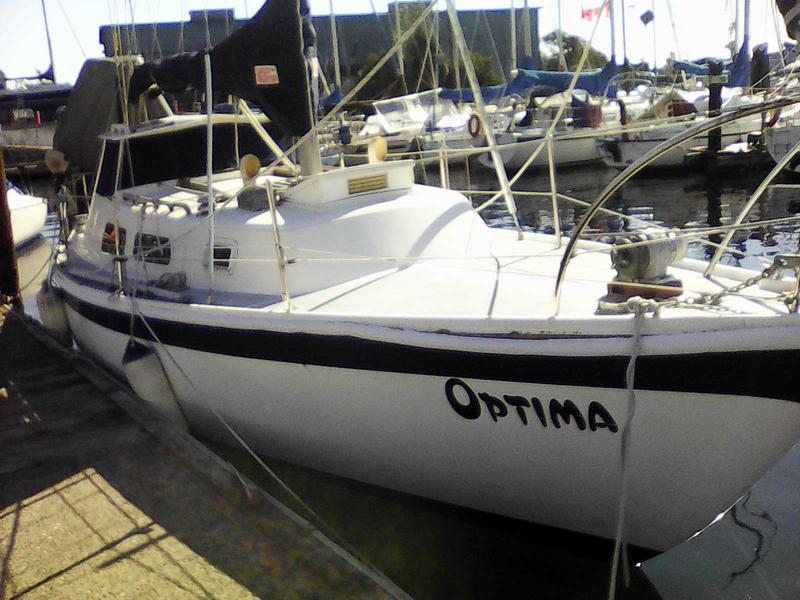
Optima was my first Cal 29. I sailed her around Vancouver island and all over the Gulf Islands when I owned her in Victoria BC
 

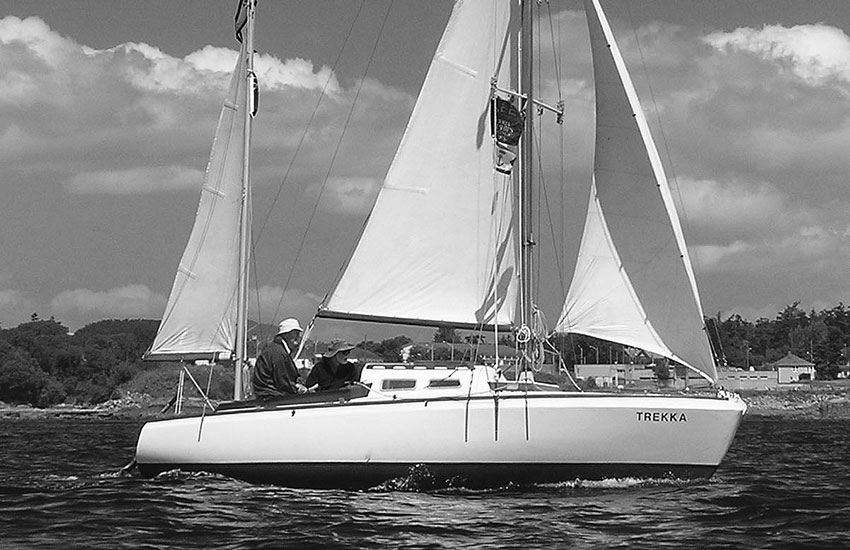
I owned a replica of Trekka, a Laurent Giles design that was the smallest boat to circumnavigate when John Guzzwell sailed it around the world in the late 1950's
 
Trekka was too small to live on board, so I sold her and bought a Cal 29 that I named Ladybug. After living on board while I finished my Masters degree, Rani and I sailed her to Mexico and then I brought her back home via Hawaii.


We purchased Ladybug II, a Coast 34, in San Carlos Mexico and sailed her in Mexico for a few seasons before crossing to New Zealand via French Polynesia, Cook Islands, Samoa, and Tonga 

Upon returning to Canada we bought a Paceship 26 similar to that shown above. We owned her for a couple of years and took her up to Princess Loiusa Inlet and down to the San Juan Islands


Drifter was a C&C 24 - a beamy, fast, and roomy little boat, but without standing headroom or a private toilet area. I sailed her solo up to Desolation Sound and beyond but sold her during Covid to buy a much larger blue water boat

Swamp Angel was the oldest and best equipped boat I have owned. Built in 1968 in England, she proved to be a fine cruising boat and took us on a 5 week adventure up to Knight Inlet during the Covid pandemic

I found Swamp Angel to be a bit overkill for our local cruising needs. I had dreamed of going further afield with her but my parent's health meant that I needed to spend a few months of the year in Nova Scotia. So I sold Swamp Angel and bought a Farr 727 (24 foot) IOR racer called Lion Passant. We cruised the gulf islands and I made a 2 week trip to Barclay Sound on the outside of Vancouver Island.

I found Lion Passant just a bit small and decided that an Ontario 28 would be a perfect compromise boat. She has a great layout below with an enclosed head and comfortable living quarters but I never fell in love with the boat.  

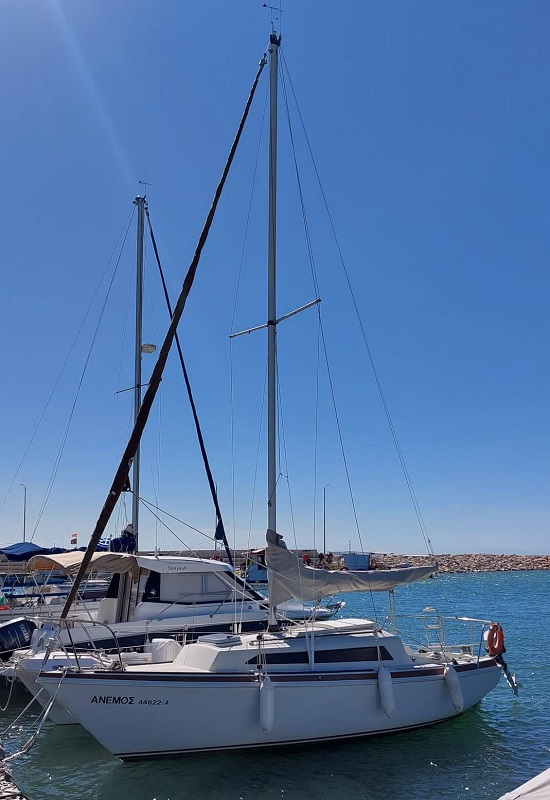
Crazy Anna is a Vancouver 27. I have admired this design for many years and considered buying one around the same time that I bought Ladybug.
 

I have always found that the smaller boats were more fun to sail and less stressful to own. The main problem with them though was that longer voyages were perhaps a bit too much of an adventure, especially if I wanted to bring along my spouse. I think now that, for me, the ideal cruising boat should be just large enough that you can live on board in inclement weather for a week or two at a time. That makes standing headroom pretty well mandatory. Having a proper private toilet rather than a bucket is another requirement with more than one person on board, as is a decent galley to cook meals. Outside, while a hank on jib is simple and sails better, I appreciate the ability, as I get older, to furl and roll up a sail to deal with changes in weather and to make getting underway and coming into port that much easier. I love a tiller for its simplicity. An outboard motor is fine, but a diesel has the advantage of longer range and no cavitation issues in rough seas. Finally, she should be able to function in rough weather and get you home in one piece when things get ugly.  

I love my new boat. She ticks pretty well all the boxes and is well mannered and a delight to sail. She was fitted out by Bob Wheeldon from whom I bought her in September. She was originally sold as a bare hull and was not properly finished inside at all. Bob had her shipped from Vancouver to Kelowna and carefully designed and build a completely new interior and all systems. He then had the engine rebuilt, redid the rig, and added a furler. She has a full complement of sails and can be rigged as a cutter. She even came with a lightly used Monitor wind vane and a lovely custom arch to which Bob had planned to fasten a solar panel. Bob kept notes on everything and provided me with binders of information, tons of spare parts, and even a set of cruising guides and charts!

I had Crazy Anna out on her first trip a few days ago and she surprised me by how well she sailed both to windward and downwind. As Bob told me, she has no vices.

Saturday, March 15, 2025

Last set of pictures from the big camera/lens combo

These are from Ndutu and Serengeti with a couple of elephant shots from our first day in Tarangire.


We came across this old zebra kill, which had been abandoned by the larger carnivores to the vultures. It was obvious from miles away by the circling birds

A still photo does not do justice to all the squabbling and ripping and tearing that was going on here

Sonya remarked that the Marabou storks looked like they were policing the whole thing

Birds were continuously arriving

Back at the lake near our camp, a herd of wildebeests had arrived

Giraffes were also drinking at this end of the lake

I believe this is a Tawny eagle

The giraffes were frightened away by all the vehicles returning to camp


Marabou stork wading at the end of the lake

And a Tawny eagle stands nearby in the stream exiting the lake


Sunrise at our tent camp


An old tusker in Tarangire approaches the vehicles


Skittish wildebeests


We certainly achieved one of our goals, which was to view the great migration up close


While we saw the largest numbers of migrating animals in Ndutu, there was plenty of wildlife in the Serengeti. These wildebeests graze in front of one of the kopjes or stone outcroppings for which this area is famous